Unraveling the Unseen Threads: Our Blog and Q&A Database

Welcome to the HBVS-PanCyBliver blog—your source for in-depth insights into the complex interplay between cardiovascular, neurological, and pandemic-related health outcomes. Join us as we explore cutting-edge research, share critical updates, and foster a deeper understanding of these challenging diseases. We are here to spark curiosity and drive collaborative discovery.

Contributing Your Voice to a Complex Dialogue

Are you a patient experiencing persistent symptoms such as sustained hypertension, chronic diarrhea, thrombosis, chest pain, or neurodegenerative issues?

Share your story with us. We can help you determine if your clinical history, or that of your loved ones, suggests specific diagnostic steps to address a potentially serious health threat.

Are you a physician, researcher, or academic interested in clinically relevant insights for diagnosing and managing diseases still labeled as 'neglected'—despite affecting up to 100 million individuals worldwide?

Are you a leader in healthcare technology, AI, digital health, or healthcare legislation looking to provide your enterprise with a solid clinical backbone and expert medical advising on most recent health topics?

Or perhaps you are a determined investigator eager to embark on a challenging yet rewarding journey to understand the intersection of cardiovascular, metabolic, neurological, and pandemic-related health outcomes?

We believe everyone can successfully join our mission, helping science unravel an intricate and, until now, largely unacknowledged disease.
Beyond established clinical pathways, we also strive to engage the laboratory segments of healthcare systems as soon as a diagnostic suspicion is formed.

Join Our Quest for Deeper Understanding

We are committed to engaging patients, researchers, and physicians in a deeper pathophysiological understanding of the most relevant diseases of our time. In doing so, we aim to refine the personal and professional perception of health and disease for both suffering individuals and the clinicians or academics who care for them.


We invite our readers to engage deeply with these topics and to support our prospective research projects, currently hosted at two esteemed institutions: Sorbonne University in Paris and Stanford University. Our goal is for every reader to gain the knowledge and inquisitive mindset necessary to foster a new medical perspective on cardiometabolic and neurological diseases.


While modern pandemics have served as an undeniable catalyst, many historical accounts of influential pathogens—dating back to ancient Rome and Greece—have never been correctly re-examined or reinterpreted. Our work seeks to integrate these historical insights into a contemporary reappraisal, supporting our understanding of pathogens as a steady, centuries-old presence in medicine that has been, until now, incomprehensibly disregarded.


The SARS-CoV-2 pandemic has not only acted as a litmus test but has significantly amplified the epidemiology of these pathogens and their related diseases, serving as a powerful catalyst for the pathogenetic processes we examine.

Unveiling the Pathogenetic Knot

The central pathogenetic hypothesis we propose is that the numerous endothelial functional and pathological alterations observed as a 'twindemic' with SARS-CoV-2 and its co-pathogens—ranging from capillaries and arterioles to major arterial vessels and the venous system—may be triggered by a widespread vascular and parenchymal invasion of a microscopic parasitic pathogen, exacerbated by SARS-CoV-2 infection.
This pathogen appears capable of persisting and evading innate and adaptive host immunity through its characteristic immunosuppressive products, remaining undetected for extended periods. The mixed effects of this infectious noxa—including direct cytotoxic damage to cells and parenchyma leading to degeneration, as well as indirect histaminergic effects causing vasoconstriction and thrombosis—develop gradually over time, with variable acceleration in both speed and severity.
Such rapid escalation typically occurs when pathogen density in biological fluids (blood, urine, feces, CSF, and breast milk) increases tenfold, reaching a critical threshold. This condition enables massive exponential asexual multiplication, both locally and in distal parenchymal beds. This systemic invasion drives vascular pathogenicity and the eventual clinical presentation, manifesting as either hypertensive-vasoconstrictive states or acute thrombotic events.

A Modern Historical Perspective

As early as 1934, a British report was published on
Transactions of the Royal Society of Tropical Medicine and Hygiene divulged a discussion between several Lieutenant Generals and Professors.

It conveyed information which should make us aware of yesterday's and today's dangers, implied by aggregated ways of living, working, and associating, whether military, religious, work- and education-related, or even detention-linked.

In particular, as of that year 1934, beyond home-acquired cysticercosis, many people in Great Britain had been exposed to a professional risk of contamination: "abroad--discharged soldiers and sailors of the regular forces, those who serving abroad during the first world war, civilians avocated overseas, and, even, crowds of tourists exploring tropical countries, without prevention measures, making it go excellently undetected for long periods." And again, "Our experience suggests that there are many undiscovered sufferers from cysticercosis among army reservists and discharged soldiers. Men who develop fits after leaving the Army hide their disability and deny it if questioned, for they live in
dread of losing their few weekly shillings of reservists' pay. Fits to them mean epilepsy, and they know that (true) epilepsy, as a " constitutional " disease, is regarded as not attributable to military service. Several ex-soldiers who had
lost job after job because of " fits "-one of them an inmate of a workhouse-made despairing appeals ad misericordiam, and have been found to be victims of cysticercosis. There must be many others throughout the country."

And again, since 1934, "Professor D. B. Blacklook called attention to the fact that in RUDOLPHI'S
time, in Berlin, cysticercus infection was found in about 2 per cent of cases at autopsy." Finally, the negative results on skin and muscle histology were deemed, as of that year, less important of analogue negative exams on the brain, as if this tissue were recognized as more sensitive in detection.

Read our latest medical news

In this space, we share inspiration, tips, and stories coming from the near and the far places in the world, pertaining to our aimed field of attention: infectious diseases as linked to cardiovascular, metabolic, and neurological outcome.

We invite the readers to read with attention, and to get the most out of our information. Whether you're looking for helpful tips, background informations, or a behind-the-scenes look, you'll find it all here. We regularly post new articles, and histories, so keep an eye on the blog for updates and new insights.

Interfering with heart muscle and arrhythmogenesis

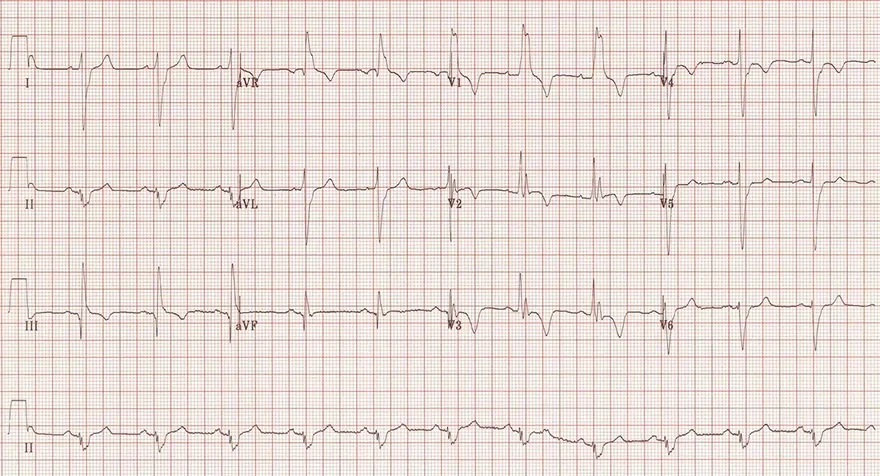
A frightening Torsade de Pointes happened during an event of intense chest pain, with a new dramatic electrocardiogram (ECG), remarkable for a striking ST elevation, later interpreted as a consensual depolarization variation, and dictated admission on September 23rd, 2023. During admission, ECG depolarization and repolarization variations were observed within the context of a new picture of severe left ventricular asymmetric hypertrophy, previously unknown. It was found phenotypically similar to hypertrophic cardiomyopathy, as also exhibited efflux obstruction, with pseudonecrosis Q waves, and marked consensual repolarization disturbances, as strikingly evident at the discharge electrocardiogram.

Read more »

Brain and heart

Characteristic appearances of 3 Tesla MRI imaging at a vault slice in a brain acquisition. In the first column, a picture of a microstarry sky in T1 acquisition is clearly evident and indicative of a miliary cysticercosis portrait, with multiple hollow cavities. In the second column, the corresponding snapshot in T2 is that of a myriad of point-like multiple dots, appearing as the hyperintense picture of the liquid inside the microcysts, being of the same liquor's density.

Read more »

Be inspired by our blueprint analyses

In this space, we share structured case analyses, highlighting the complexities of diagnosis and detection, alongside stories that help you maximize the benefits of our services. Whether you are looking for practical tips, background information, or a behind-the-scenes perspective, you will find it all here.
We regularly post new articles, so be sure to check back for updates and fresh insights. Furthermore, we feature individual case histories and clinical trajectories that parallel our own, reflecting common patterns of hypertensive, locomotor, or widespread neurological involvement, as well as infectious complications.


The brain healing

Since March 22nd, 2023, following the 3T MRI scan, a long journey with cysticercosis began, leading to a diagnosis and the correct initiation of albendazole treatment (400 mg b.i.d.). Either standard or increased doses, matching the maximum allowed (400 mg, two tablets t.i.d.), were prescribed, resulting in definitely positive clinical and imaging outcomes.

Read more »

Interfering with heart muscle and arrhythmogenesis

A frightening Torsade de Pointes happened during an event of intense chest pain, with a new dramatic electrocardiogram (ECG), remarkable for a striking ST elevation, later interpreted as a consensual depolarization variation, and dictated admission on September 23rd, 2023. During admission, ECG depolarization and repolarization variations were observed within the context of a new picture of severe left ventricular asymmetric hypertrophy, previously unknown. It was found phenotypically similar to hypertrophic cardiomyopathy, as also exhibited efflux obstruction, with pseudonecrosis Q waves, and marked consensual repolarization disturbances, as strikingly evident at the discharge electrocardiogram.

Read more »

Brain and heart

Characteristic appearances of 3 Tesla MRI imaging at a vault slice in a brain acquisition. In the first column, a picture of a microstarry sky in T1 acquisition is clearly evident and indicative of a miliary cysticercosis portrait, with multiple hollow cavities. In the second column, the corresponding snapshot in T2 is that of a myriad of point-like multiple dots, appearing as the hyperintense picture of the liquid inside the microcysts, being of the same liquor's density.

Read more »

The brain healing

Since March 22nd, 2023, following the 3T MRI scan, a long journey with cysticercosis began, leading to a diagnosis and the correct initiation of albendazole treatment (400 mg b.i.d.). Either standard or increased doses, matching the maximum allowed (400 mg, two tablets t.i.d.), were prescribed, resulting in definitely positive clinical and imaging outcomes.

Read more »

Read our latest news

In this space, we share inspiration, tips, we gather from the stories which we received by readers. We chose to adopt this format, aiming to help you get the most out of our services. Whether you're looking for helpful tips, background information, or a behind-the-scenes look, you'll find it all here. We regularly post new articles, so keep an eye on the blog for updates and new insights.

Interfering with heart muscle and arrhythmogenesis

A frightening Torsade de Pointes happened during an event of intense chest pain, with a new dramatic electrocardiogram (ECG), remarkable for a striking ST elevation, later interpreted as a consensual depolarization variation, and dictated admission on September 23rd, 2023. During admission, ECG depolarization and repolarization variations were observed within the context of a new picture of severe left ventricular asymmetric hypertrophy, previously unknown. It was found phenotypically similar to hypertrophic cardiomyopathy, as also exhibited efflux obstruction, with pseudonecrosis Q waves, and marked consensual repolarization disturbances, as strikingly evident at the discharge electrocardiogram.

Read more »

Brain and heart

Characteristic appearances of 3 Tesla MRI imaging at a vault slice in a brain acquisition. In the first column, a picture of a microstarry sky in T1 acquisition is clearly evident and indicative of a miliary cysticercosis portrait, with multiple hollow cavities. In the second column, the corresponding snapshot in T2 is that of a myriad of point-like multiple dots, appearing as the hyperintense picture of the liquid inside the microcysts, being of the same liquor's density.

Read more »

Explore our compendium of case studies. Each entry demonstrates our meticulous attention to detail and our commitment to delivering results that exceed expectations.

Discover our most recent breakthroughs.

Explore our miscellany of clinical cases and proof-of-concept evidence regarding contemporary epidemiological insights.
These findings shed light on both environmental and medical perspectives concerning the pathophysiological mechanisms underlying cysticercosis. Each case manifests through a unique and diverse clinical presentation, depending on the systems involved, the infective burden, and tissue pathogen titers. Consequently, various clinical evolutions and outcomes are observed.
Each case history exemplarily demonstrates how focused medical attention on specific details can reveal the nuances of every story. Our objective is to combine clinical precision with a commitment to delivering results that exceed expectations, serving as a benchmark for laypeople, colleagues, and academia alike.

Compelling insights

Explore our most compelling clinical cases—essential and enlightening for any health-conscious individual, regardless of their medical background. We take pride in demonstrating how critical questions, when not overlooked, can lead to transformative answers. Each story reflects our meticulous attention to detail and our commitment to delivering results that exceed expectations.

A very unusual case: the horse whisperer

A young man of 56 yrs, living with his brother, and devoid of any previous important health issue, faced a severe and acute episode of dyspnea. A new hospital admission documented a complete right bundle branch block, as well as an S1Q3T3 pattern. Also, a right ventricular overload was apparent from the negative T waves in V1-V3.

Due to an important hypoxemia, a contrast-enhanced computed tomography was taken, which, in succession, returned a picture of a severe pulmonary thromboembolism, with an almost occluding embolus in the proximal right pulmonary artery.

This condition, happening more than six month before our evaluation, was apparently unexplainable. Indeed, taken to our visit due to secondary right ventricular dysfunction, the young man was seemingly devoid of any other thrombotic risk factor. A total-body TC had excluded any feared primary or repetitive neoplastic process. Similarly, no thrombofilic condition had been present in his whole family, or even in his previous clinical history. No dyslipidemia or diabetes, no hypertension, no sedentary posture, nor recent traumatic episodes, nor fractures. By in-depth investigating his clinical history, only an inedited circumstantial factor was apparent: the man, living with a completely healthy brother, had only an occupational peculiar exposure: he had been working with horses in the last twenty years.

The hypothesis that a zoonotic infection had promoted or favoured the thrombotic appearance emerged imperiously on the scene, though not yet proved, as it came early to our attention, when we had not realized that cysticercosis could have such a so high spreading.

At a low pace, with high fatalities, but not only..

A district in Rome, third through fourth in the city ranking, for number of inhabitants, among all the existing neighbourhoods, has shown a very high rate of disabilities. 

In particular, and at least since the last two decades, people over the age of 65-70 yrs have been increasingly requiring walkers to deambulate, or are increasingly restricted to bed. No less than 30-40 new slow pacers have been increasingly recognised in the district, per year. No more than 6-10 years have been observed to elapse before their death.

If we have observed this type of temporal relation, the motility impairment before and the vascular events later, former articles, published in 2018  (Di Filippo A), from data derived from the whole Italian territory on the relationship between less refined and more generic socio-economic deprivation indicators, and the drugs' consumption for diabetes and hypertension, seemed to confirm the causal direction, by tertiles of deprivation. The paper did not seem, however, to glimpse and foresee any possible disease-related pathogenetic link between the deprivation condition and the increased drugs' consumption, as we, conversely, are certain of having detected and confirmed, with ex-juvantibus and ex-nocentibus proofs. 

Consistently, also increasing rates of hypertension (according to data on relative drug consumption as per pharmaceutical systematized data), and of ischemic heart disease, vascular disease, and even neurodegenerative diseases, are reported. 

We wonder whether the testified link between gestational hypertension and epilepsy in the newborn (Xue B, JCI 2025) could represent a proof-of-concept of the consistency of spread cysticercosis mediating both of them. A similar condition could be the basis of the documented 7-fold higher risk of hypertension in children with epilepsy arising before the age of 5 yrs (Moll JC, Children 2025).

Explore our latest reappraisals.

Explore our collection of striking clinical cases and their supporting illustrative materials. Each case demonstrates our meticulous attention to detail and our commitment to delivering results that exceed expectations.

The brain healing

Since March 22nd, 2023, following the 3T MRI scan, a long journey with cysticercosis began, leading to a diagnosis and the correct initiation of albendazole treatment (400 mg b.i.d.). Either standard or increased doses, matching the maximum allowed (400 mg, two tablets t.i.d.), were prescribed, resulting in definitely positive clinical and imaging outcomes.

Read more »

Interfering with heart muscle and arrhythmogenesis

A frightening Torsade de Pointes happened during an event of intense chest pain, with a new dramatic electrocardiogram (ECG), remarkable for a striking ST elevation, later interpreted as a consensual depolarization variation, and dictated admission on September 23rd, 2023. During admission, ECG depolarization and repolarization variations were observed within the context of a new picture of severe left ventricular asymmetric hypertrophy, previously unknown. It was found phenotypically similar to hypertrophic cardiomyopathy, as also exhibited efflux obstruction, with pseudonecrosis Q waves, and marked consensual repolarization disturbances, as strikingly evident at the discharge electrocardiogram.

Read more »

Brain and heart

Characteristic appearances of 3 Tesla MRI imaging at a vault slice in a brain acquisition. In the first column, a picture of a microstarry sky in T1 acquisition is clearly evident and indicative of a miliary cysticercosis portrait, with multiple hollow cavities. In the second column, the corresponding snapshot in T2 is that of a myriad of point-like multiple dots, appearing as the hyperintense picture of the liquid inside the microcysts, being of the same liquor's density.

Read more »

Submit Your questions or Cases: Contributing to our Question & Answer Database

If your personal case is not represented in our current series, we invite you to contact us. Please provide your contact details along with a brief message outlining your experience, concerns, or questions; feel free to include any relevant medical results. We will respond to your inquiries privately, requesting further information if necessary and proposing potential solutions. With your consent, we may also publish your anonymized case in our growing Knowledge Base—a comprehensive, topic-indexed Q&A resource designed to help others navigate similar challenges.

If you wish to receive our monthly newletter, please subscribe

Subscribing to our mailing list

Meet our Team

Behind every service we provide is a dedicated team of professionals, each bringing unique expertise and enthusiasm to our mission. Whether addressing medical, organizational, legal, or engineering challenges, our multidisciplinary team is united in a coordinated and efficient effort to tackle this global health crisis.

Elena Conti


Founder & Owner,  Chair, Researching Physician & Manager

Founder at Intensive Cardiac Care Unit 2003-2004 at Sapienza University, Rome.

Emergency Cardiology Teaching. Primary and Secondary Cardiovascular Prevention Programs.

Atherothrombosis, Hypertension, Cardiovascular and Neurological diseases.

Clinical, Intensivist, and Outpatient Cardiologist

Medical Doctor 32-Yrs Cardiology Specialty 28-Yrs,  Infectious Diseases Subject expert 15-Yrs

Neurology practice 5-Yrs, 

PhD in Cellular and Molecular Cardiology,

Master's in Clinical Competence in Intensive Cardiac Care, FIorence School of Medicine

Mara Martini


Co-founder and Law referee for medical & rights issues. Social capital discipline expertise. 2007 Thesis in "Social capital discipline: nature, function and utility: comparison between Italian and US disciplines. Nature and functions of social capital. Internal and communitary discipline of social capital, developed at the Chair of Private Comparative Law at LUISS University, Rome.

Write, edit, and proofread articles on various topics. Expert on juridical issues of interpersonal, communication, privacy, and relationships, family, and work Law. Strong  breathed spirit in the history of philosophy and literature, the philosophy and history of classic age.

Suggizett Satoba

Co-founder and English and Spanish Language and Culture Teaching Assistant, English second language tutor,

Bachelor of Arts in Psychology and International Relations.

Trained mentor at Mentor Collective.

IBM SPSS Statistics.

Supporting role in data creation and formal analysis.

Assistance in conference preparation and research projects.
Data management in SPSS.
Survey coding and design on Qualtrics,

Informed Consent administrations.

Tracking and interviews.

Edit and proofread papers and presentations.

Literature searches and reference formatting for different projects. 

Serena Mancini

Co-founder and Solicitor at Piccinini Studio Legale, Professor in Labour Law and Composition with Creditors. Professor in Labour Law and Corporate Crisis at LUMSA University, Rome. Former stage at Varnum’s Banking Practice Team on Italian and American Bankruptcy and Labour Law. Daily working on matters of Private and Public Employment Law, Trade Union Law, Social Security Law, and Civil Law, specialised in Contracts, Commercial Law, and, more specifically, Corporate Law, Corporate Restructuring and Reorganization, and Insolvency Proceedings.

2-Yrs Advanced Training School in Labor, Trade Union, and Social Security Law, organised by AGI.

Alessandro Conti

Co-founder and Process Engineer at Saipem.

Former experience in Venice implants, Milan All Solutions, and Sustainable Infrastructures, Saudi Arabia Fertilizer Complex.

Competences in:

  • Front-End Engineering Design
  • Engineering, Procurement, and Construction
  • Hazard and Operability Study Leader
  • Piping
  • Piping & Instrumentation Diagram
  • Onshore infrastructures  
  • Process engineering
  • Offshore drilling
  • Petrochemical
  • Pipelines
  • Oil
  • Oil & gas
  • Project engineering
  • Refineries

Contact

via Todi n 60
00181 Roma

Opening Hours

Mon - Fri: 9am - 5pm
Saturday: 10am - 3pm
Sunday: Closed

Contact

Socials

Address

via Todi n 60

00181 Roma

Opening Hours

Mon - Fri: 9am - 5pm

Saturday: 10am - 3pm

Sunday: Closed